
§ About

A workbench written by engineers who got tired of opening seven tabs.

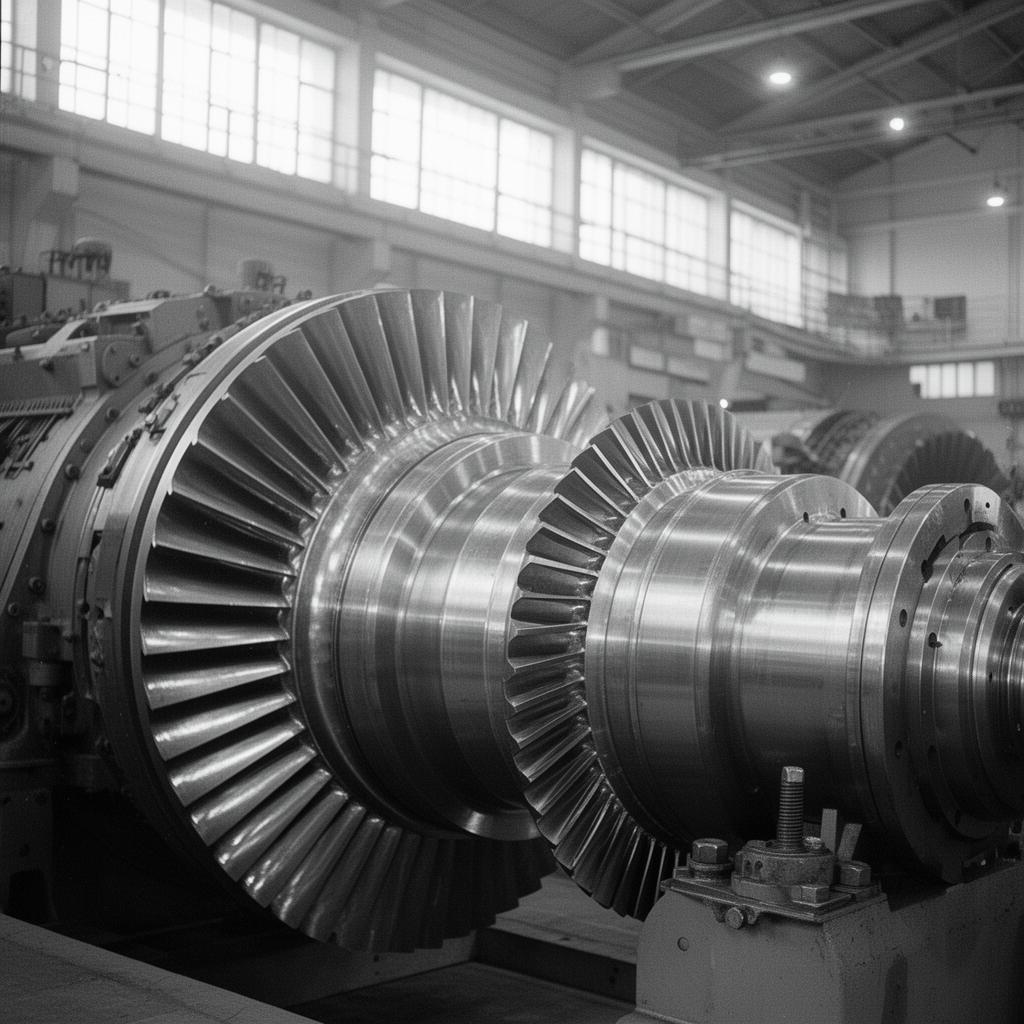
Low-pressure turbine rotor, in situ

RE: ENGINE HALL · ARCHIVAL
Black and white photograph of a low-pressure steam turbine rotor in an engine hall

FIG. A.01

A 250 MW LP rotor mid-overhaul. The work that informs every default in Dynamica happens in rooms that look like this — not in a browser tab.

0.

Who built this

Built by Rafael Netto — mechanical engineer (MSc, thermal sciences), 15 years designing, selling and operating industrial boilers. Currently managing a seven-boiler biomass fleet at a multinational, where every retrofit, derate and reliability call has become a stress-test for the tools you see here. Dynamica started as the toolkit I needed at my own day job.

Dynamica is what an operator builds when the spreadsheets stop scaling. The AI co-pilot exists because the founder got tired of answering the same boiler-room questions twice a week — it runs the same validated engines as the rest of the app, and cites every step.
I.

Mission

We started Dynamica because the daily work of a thermal engineer still happens in a thicket of spreadsheets, printed steam tables and uncited PDF calculators. Each one is almost right. Together they slow down the design review and leave the next engineer with no audit trail.

Our mission is plain: give practicing engineers the cleanest possible interface to the equations they already know, and cite the source on every result. No magic numbers, no hidden correlations, no “premium” unit conversions.

II.

Methodology

Every property routine is implemented from the originating standard, not adapted from another package. We test against the published reference tables at every release and publish the residuals alongside the changelog.

User input is in real engineering units, with the option to switch presentation between SI and US customary without re-entering data. Results carry their uncertainty band where the standard defines one.

III.

References

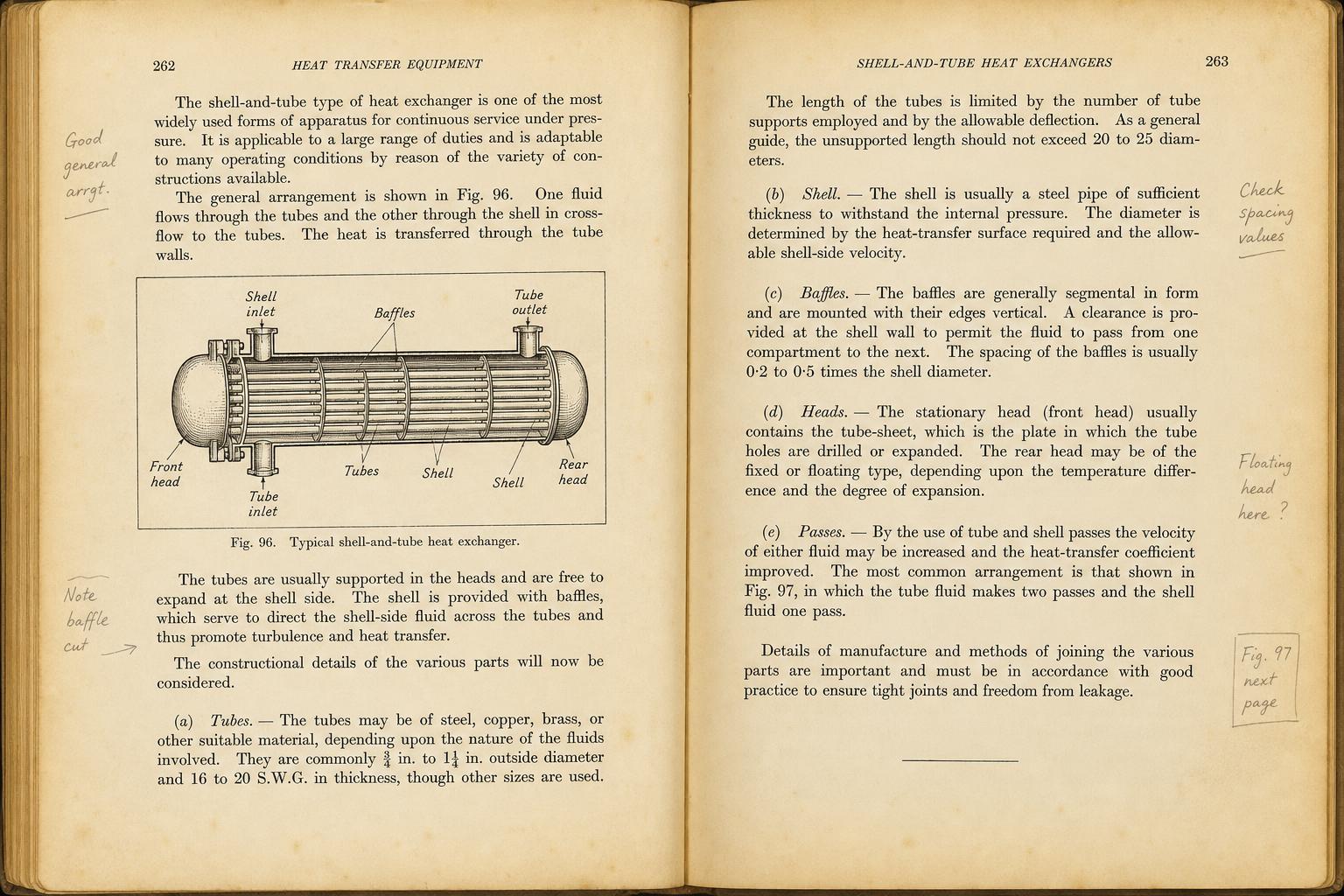
Reference plate — shell-and-tube heat exchanger

RE: KERN · 1950 · P. 262
Scan of an aged engineering textbook page describing shell-and-tube heat exchangers with a labeled diagram

FIG. A.02

The kind of source material we cross-check against. Every property routine in Dynamica is implemented from the originating standard, then validated against published reference tables.

IAPWS-IF97
Industrial Formulation 1997 for the thermodynamic properties of water and steam, with the 2007 and 2012 revisions for region 5 and high-pressure backward equations.
ASME B31.1
Power piping code — allowable stress, flexibility, and pressure-design calculations used by the piping module.
EN 12952
Water-tube boilers and auxiliary installations, parts 15 (acceptance tests) and 16 (combustion). Drives the boiler efficiency and emissions modules.
ASHRAE Handbook
Fundamentals — moist air properties, psychrometric algorithms and altitude corrections.
Phyllis2
ECN biomass and waste database, used as the seed library for fuel proximate and ultimate analyses.

Disagree with an implementation choice? Write to us — we read every note and publish the discussion in our field notes.